Hydrogen Compression: How Can We Master Storage and Transportation?
The future of energy is hydrogen-powered – but how do we get it where it belongs? While hydrogen is renowned as one future energy solution, the vital role of its efficient, safe and economic transportation or storage often remains overlooked. In this episode of -253°C, our expert Marius Plingen from Bosch Rexroth demonstrates how advanced compression technologies are the key to unlocking hydrogen's full potential.
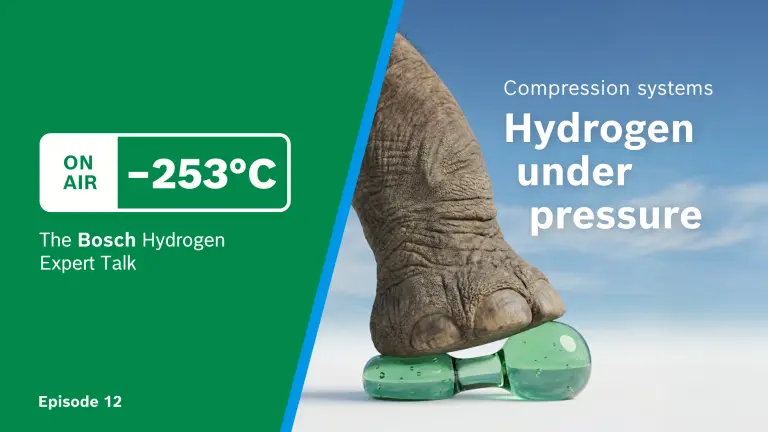
-253°C | The Bosch Hydrogen Expert Talk #12: Hydrogen under Pressure
Loading the video requires your consent. If you agree by clicking on the Play icon, the video will load and data will be transmitted to Google as well as information will be accessed and stored by Google on your device. Google may be able to link these data or information with existing data.
In this episode, Marius Plingen, Technical Sales Manager at Bosch Rexroth, explains why compressing hydrogen is so crucial for its widespread adoption.
Why does hydrogen need to be compressed?
To efficiently transport and store hydrogen, its volume must be drastically reduced. The ability to safely, efficiently, and cost-effectively compress hydrogen is fundamental to unlocking its full potential as an energy carrier and enabling an efficient global hydrogen economy.
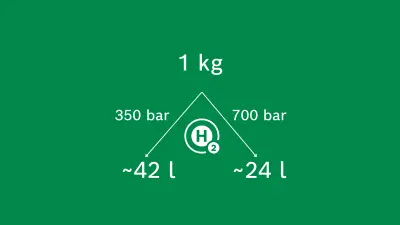

What are solutions for hydrogen storage and transportation?
Innovative compression solutions, such as hydraulically driven gas compression and advanced cryopump technology from Bosch Rexroth, are overcoming hydrogens storage and transportation problem.
Leveraging their expertise in hydraulics, Bosch Rexroth develops compact, energy-efficient drive systems capable of delivering the immense forces required for hydrogen compression.
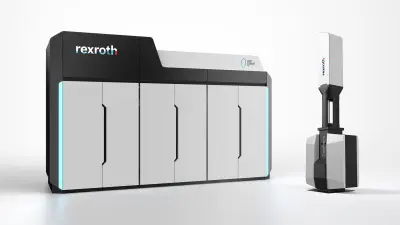
Why efficient, reliable and compact hydrogen compression systems are important
-

Efficient compression systems lower costs for the end consumer. -

Reliable compression systems help prevent a breakdown in compression, which can halt the entire value chain. -

Compact compression systems increase flexibility and reduce investment costs.
What are alternatives to hydrogen compression?
An alternative to compression is the liquefaction of hydrogen. This process involves cooling gaseous hydrogen to extremely low temperatures (down to -253°C), causing it to transition into liquid state. However, working with liquid hydrogen presents significant technical challenges:
Extreme cold
The boiling point of -253°C places the highest demands on material science. Special alloys and seals are necessary to prevent leaks and ensure the integrity of the systems.
Boil-off and blow-by effects
Due to the extremely low temperatures, "boil-off" effects can occur, where a portion of the liquid hydrogen vaporizes, as well as "blow-by" effects, an undesirable escape of gas.
Compression requirements
Even liquid hydrogen needs to be brought to high pressures for certain applications, such as vehicle refueling or trailer filling. This requires specialized pumping technologies.
CryoPump technology as a solution for hydrogen liquefaction challenges
An innovative solution to overcome these challenges and efficiently compress liquid hydrogen, is the Bosch Rexroth CryoPump. These proprietary cryopump systems deliver up to 600 kg/h at 900 bar – a gamechanger for high-pressure infrastructure. The scalability, reliability, and energy efficiency of such compression technologies are vital for reducing operational costs and integrating hydrogen into existing and future energy systems.
Want to find out more about Cryopumps?